Complete Guide to Texas Online Casinos: Real Money Online Casinos, Legal Insights and Top Bonuses
Legal Status of Online Gambling in the US and Texas

Casino gambling is illegal in Texas!
Online gambling in the United States is regulated primarily at the state level rather than through a single federal law. There is no nationwide statute that fully legalizes or bans online casinos across the country. Instead, federal legislation establishes certain restrictions while individual states decide which forms of gambling can legally operate within their borders.
One of the key federal laws affecting the industry is the Unlawful Internet Gambling Enforcement Act of 2006 (UIGEA). UIGEA does not make online gambling illegal for individual players. Instead, it prohibits financial institutions from knowingly processing transactions connected to gambling activities that are illegal under state or federal law. This framework allows each state to determine whether online casinos, poker, or sports betting may be authorized and regulated locally.
Several states, including New Jersey, Pennsylvania, and Michigan, have legalized and regulated real-money online casinos and online poker through licensed operators supervised by state gaming authorities. These regulated markets include strict rules related to licensing, geolocation, consumer protections, and responsible gambling practices.
Texas has taken a far more restrictive approach to online gambling. At present, the state has not legalized real-money online casinos or online poker. There are currently no state-licensed online casino operators authorized to offer slots, table games, or poker for real money within Texas. State gambling laws generally prohibit most forms of commercial casino gambling unless specifically authorized by law.
Sports betting is also not currently legal in Texas. Although lawmakers have introduced multiple bills in recent years seeking to legalize retail and online sports wagering, none have successfully passed into law. As a result, Texas residents do not have access to a regulated statewide sports betting market similar to those operating in other states.
Despite these restrictions, Texas does allow limited forms of legal gambling. The Texas Lottery operates statewide, and charitable gaming activities such as bingo and raffles are permitted under specific regulations. The state is also home to a small number of tribal gaming facilities operating under federal tribal gaming law, including the Kickapoo Traditional Tribe of Texas casino in Eagle Pass. However, these tribal properties do not currently offer regulated statewide online casino gaming.
Many Texas residents may encounter offshore gambling websites that claim to accept players from the state. These platforms operate outside U.S. regulatory oversight and are not licensed by Texas authorities. Because they are not regulated within the state, players using offshore sites do not receive the same consumer protections, dispute resolution systems, or financial safeguards available in regulated U.S. gambling markets.
Social casinos remain generally accessible in Texas because they use virtual currency rather than real-money wagering. These platforms typically allow users to play casino-style games for entertainment purposes without cashing out winnings for real money.
Legal and Illegal Gambling Activities in Texas
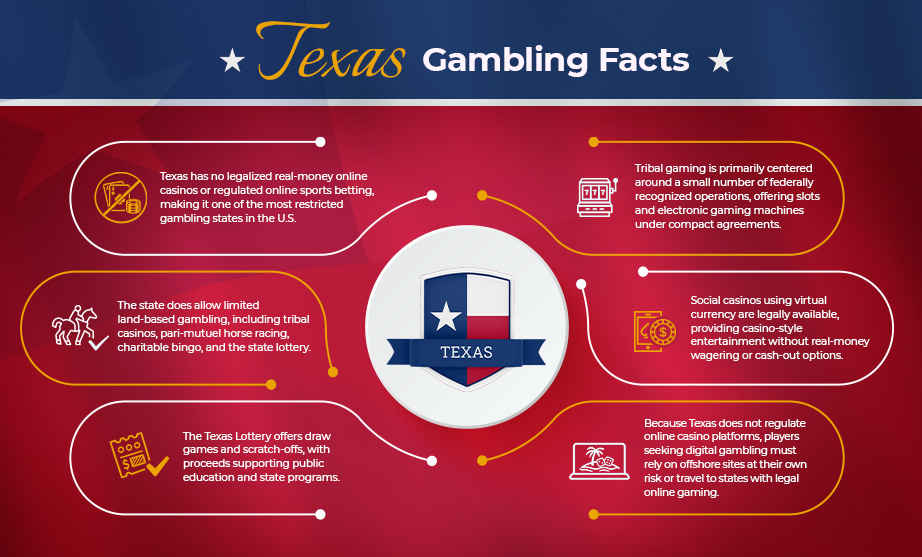
Texas has one of the more restrictive gambling environments in the United States. While the state permits a limited number of regulated gambling activities, most forms of commercial casino gambling remain prohibited under state law. This includes real-money online casinos and statewide sports betting, both of which have not been legalized in Texas. Understanding which gambling activities are allowed—and which remain unauthorized—is important for anyone looking to gamble legally within the state.
Legal Gambling Activities in Texas
State Lottery
The Texas Lottery is one of the primary forms of legal gambling in the state. Players can purchase scratch-off tickets, draw game entries, and participate in multi-state lottery games such as Powerball and Mega Millions. Revenue generated through the lottery helps fund public education programs and veteran support initiatives across Texas.
Tribal Gaming
Texas allows limited tribal gaming operations under federal law. Tribal gaming activities are governed through federal tribal gaming regulations and agreements with the state. Gaming options primarily include electronic gaming machines and certain casino-style games permitted under applicable tribal gaming rules.
Horse and Greyhound Racing
Pari-mutuel wagering on horse racing is legal at licensed racetracks and approved betting facilities in Texas. The industry is regulated by the Texas Racing Commission, which oversees compliance, licensing, and wagering integrity. While horse racing remains legal, the state’s racing industry has declined in recent years compared to larger racing markets elsewhere in the country.
Charitable Gambling
Certain charitable gambling activities are legal in Texas when conducted by qualified nonprofit organizations. This includes bingo games, raffles, and charitable poker events operating under specific legal restrictions. Organizations must comply with state licensing and operational requirements to legally conduct these activities.
Social and Sweepstakes Casinos
Social casino platforms that use virtual currency instead of direct real-money wagering are generally accessible in Texas. Because players typically cannot cash out winnings for cash prizes, these platforms operate differently from regulated real-money gambling services. Some sweepstakes-style gaming platforms also operate under promotional sweepstakes models rather than traditional gambling frameworks.
Daily Fantasy Sports (DFS)
Daily fantasy sports currently operate in a legal gray area in Texas. Major DFS platforms continue accepting Texas players, although the legal status of paid fantasy contests has been debated for years. In 2016, the Texas Attorney General issued an opinion stating that certain paid DFS contests could violate state gambling laws, but no statewide prohibition or regulatory framework has been formally enacted.

Illegal or Unauthorized Gambling Activities in Texas
Real-Money Online Casinos
Texas has not legalized or regulated real-money online casinos. There are currently no state-licensed online casino operators authorized to offer online slots, blackjack, roulette, poker, or live dealer games for real money within the state. Any website claiming to operate as a regulated Texas online casino is not authorized under Texas law.
Online Poker
Online poker is also not regulated or legalized in Texas. Residents do not have access to any state-approved real-money online poker platforms similar to those operating in states such as New Jersey, Pennsylvania, or Michigan.
Sports Betting
Sports betting remains illegal in Texas. Although several legislative proposals have been introduced to legalize retail and online sportsbooks, none have successfully passed. As a result, Texans cannot legally place sports wagers through regulated state-approved sportsbooks.
Offshore Gambling Sites
Some offshore gambling websites accept players from Texas. However, these platforms operate outside U.S. jurisdiction and are not licensed or regulated by Texas authorities. Because they fall outside the state’s regulatory system, players using offshore casinos do not receive the same protections related to fairness, security, dispute resolution, or responsible gambling standards that exist in regulated markets.
Illegal Gambling Operations
Unauthorized gambling operations—including underground poker games, illegal sportsbooks, and unlicensed betting businesses—are prohibited under Texas law. Operating illegal gambling enterprises can result in criminal penalties, fines, and potential asset seizures.
Unauthorized Gaming Machines
Slot machines and gambling devices are generally prohibited outside approved tribal gaming facilities and narrowly defined legal exceptions. Illegal gaming machines found in convenience stores, game rooms, bars, or private establishments may be confiscated by law enforcement authorities.
Regulations, Oversight, and Responsible Gambling in Texas
Texas does not currently have a centralized commercial casino regulator because most forms of casino gambling remain prohibited. Instead, different agencies oversee the limited forms of legal gambling permitted within the state.
The Texas Lottery Commission regulates lottery operations and charitable bingo activities, while the Texas Racing Commission oversees pari-mutuel wagering on horse and greyhound racing. Tribal gaming operations are supervised under federal tribal gaming law and tribal regulatory authorities.
Law enforcement agencies throughout the state are responsible for investigating illegal gambling operations and unauthorized gaming activities. Texas authorities regularly conduct enforcement actions targeting unlawful game rooms, illegal sportsbooks, and unauthorized gambling devices.
Although Texas does not currently operate a regulated online casino market, responsible gambling resources are still available through national organizations and state-supported programs. Players participating in any legal gambling activity are encouraged to use responsible gaming practices and seek assistance if gambling becomes problematic.
Gambling Laws in Neighboring States
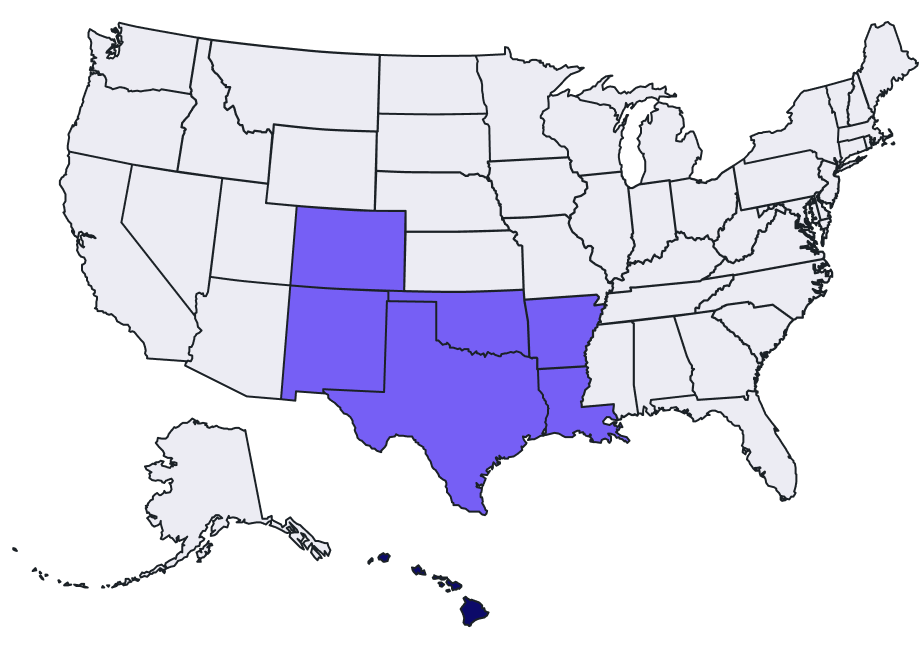
Texas borders several states with very different gambling laws and regulatory approaches. While Texas maintains strict limits on casino gambling, online casinos, and sports betting, some neighboring states have expanded legal gambling options significantly. For players traveling across state lines or comparing regional markets, these differences can be substantial.
Louisiana
Louisiana has one of the largest gambling industries in the southern United States. The state allows commercial casinos, riverboat casinos, racinos, tribal casinos, and a state lottery. Sports betting is also legal in Louisiana, both at retail sportsbooks and through licensed mobile betting apps operating in approved parishes.
However, Louisiana has not legalized real-money online casinos or statewide online poker. While residents can legally place online sports bets, casino-style online gambling remains unavailable through regulated state platforms.
Oklahoma
Oklahoma has a major tribal gaming industry and is home to dozens of tribal casinos offering slot machines, table games, poker rooms, and other casino-style gaming options. Tribal casinos operate under compacts with the state and represent one of the largest tribal gaming markets in the country.
The state lottery and charitable gaming are also legal. However, Oklahoma has not legalized online casinos, online poker, or statewide sports betting. Sports betting legislation has been discussed in recent years, but no regulated market has launched so far.
New Mexico
New Mexico permits tribal casino gambling under federal tribal gaming compacts. Tribal casinos throughout the state offer slot machines, blackjack, poker, and other table games. The New Mexico Lottery and pari-mutuel horse racing wagering are also legal and regulated.
Sports betting exists in a limited form through some tribal casinos, which began offering retail sportsbooks after the repeal of PASPA in 2018. However, New Mexico does not have a statewide regulated online sports betting market, and real-money online casinos and online poker remain unauthorized.
Arkansas
Arkansas has expanded its gambling market considerably in recent years. The state allows commercial casino gaming at several licensed casino properties offering slots, table games, poker, and sportsbooks. Sports betting is legal both in person and through approved mobile sportsbook apps connected to licensed casinos.
Despite these expansions, Arkansas has not legalized online casinos or online poker. Casino-style gambling remains limited primarily to physical casino locations within the state.
What This Means for Texas Players
Compared to several neighboring states, Texas maintains a far more limited gambling framework. States like Louisiana and Arkansas allow legal sports betting, while Oklahoma offers one of the country’s largest tribal casino markets. Nevada-style commercial casinos and regulated online casinos, however, remain unavailable throughout most of the region.
For Texas residents, crossing state lines can significantly change which gambling activities are legally accessible. In some neighboring states, players may gain access to sportsbooks, large tribal casinos, or commercial casino resorts that are not permitted under Texas law. Real-money online casinos, however, remain largely restricted across the region outside of a handful of fully regulated iGaming states elsewhere in the country.
Playing Real Money Online Casinos in Texas
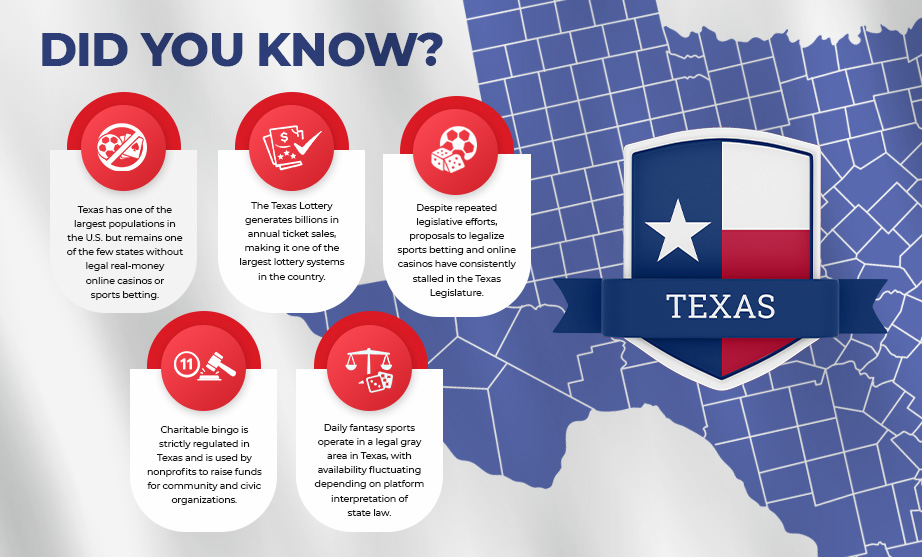
If you live in Texas and want to play real-money online casino games, it’s important to understand the state’s current gambling laws. As of 2026, Texas has not legalized or regulated online casinos. There are no state-licensed platforms authorized to offer online slots, blackjack, roulette, baccarat, poker, or live dealer games for real money within the state.
While some other U.S. states have created regulated online gambling markets, Texas continues to maintain strict limitations on most forms of casino gambling and online wagering.
Online Casinos in Texas
Texas does not currently permit regulated real-money online casinos. Residents cannot legally access a state-approved platform for casino-style gaming over the internet, and no Texas-based licensing system exists for online casino operators.
This means popular forms of iGaming—such as online slots, roulette, blackjack, baccarat, craps, and poker—are not available through any regulated Texas operator.
Some residents use social casino or sweepstakes-style gaming platforms that operate with virtual currencies or promotional prize systems rather than direct real-money gambling. These platforms function differently from regulated online casinos because players generally cannot wager and withdraw cash in the same way as licensed casino markets in states like New Jersey or Pennsylvania.

Land-Based Casinos in Texas
Texas has only limited land-based casino gambling compared to many other states. The most notable venue is operated by the Kickapoo Traditional Tribe of Texas under federal tribal gaming law.
The state also has limited tribal gaming operations run by the Ysleta del Sur Pueblo and the Alabama-Coushatta Tribe, though legal disputes and regulatory restrictions have historically affected the types of gaming these facilities may offer.
Unlike states with large commercial casino industries, Texas does not permit Las Vegas–style commercial casinos offering widespread table games and sportsbooks.
Sports Betting
Sports betting is not currently legal in Texas. Residents do not have access to regulated online sportsbooks or retail sports betting locations within the state.
Although sports betting legislation has been proposed multiple times in recent years, no bill has successfully legalized mobile or in-person wagering. Texans who travel to neighboring states such as Louisiana may legally access regulated sportsbooks while physically located there, but Texas-based wagering remains prohibited.
Accessing Online Casinos in Other States
Several U.S. states have legalized and regulated real-money online casinos, including New Jersey, Pennsylvania, and Michigan. Licensed operators in these states offer online slots, poker, table games, and live dealer experiences under strict state oversight.
However, these platforms require players to be physically located inside the state where the operator is licensed. Geolocation technology is used to verify player location before allowing real-money wagers.
This means Texas residents cannot legally access regulated online casinos from states like New Jersey or Michigan unless they are physically present within those states.
Offshore Online Casinos
Some offshore gambling websites accept players from Texas despite the absence of regulated local online casinos. These platforms operate outside U.S. jurisdiction and are not licensed or supervised by Texas regulators.
Because offshore casinos are not part of a regulated state framework, players may face risks involving payouts, customer disputes, account security, or responsible gambling protections. Unlike licensed U.S. operators in regulated states, offshore platforms are not required to follow Texas consumer protection standards.
Who Can Legally Gamble in Texas
Age requirements in Texas vary depending on the activity. Lottery participation is generally available to players aged 18 and older, while tribal casino gaming facilities typically require players to be at least 21 years old.
Charitable bingo and pari-mutuel wagering also operate under separate state rules and licensing requirements. Any gambling activity outside approved legal categories may violate Texas gambling laws.
Top Real Money Online Casino Games in Texas
Real-money online casinos are not currently legal or regulated in Texas. Because the state has not authorized online casino gambling, residents do not have access to state-licensed platforms offering online slots, blackjack, roulette, baccarat, poker, or live dealer games for real money.
Even so, many Texas players are familiar with the most popular casino games commonly found in regulated online gambling markets across the United States. In states where online casinos are legal, licensed operators typically provide a large selection of digital and live dealer games designed to replicate the experience of a traditional casino.
Here are some of the most popular real-money online casino games commonly available in regulated U.S. iGaming markets.
Online Slots
Online slots are the most popular category in online casinos due to their simplicity and wide variety of themes and features. Players can choose from classic three-reel slots, modern video slots, and progressive jackpot games that may build substantial prize pools over time.
Many slot titles include bonus rounds, free spins, multipliers, wild symbols, and themed gameplay inspired by movies, mythology, adventure, and pop culture. Because slots require no special strategy, they are often the first games new casino players try.

Blackjack
Blackjack remains one of the most recognizable casino games because it combines luck with player decision-making. The objective is to build a hand closer to 21 than the dealer without going over.
Licensed online casinos usually offer multiple blackjack variants, including single-deck, multi-deck, and live dealer blackjack (learn about live blackjack, its providers and most popular sites to play for real money HERE). Some versions also feature side bets, tournaments, and lower-limit tables for casual players.
Online Poker
Online poker appeals to players who prefer competitive and skill-based gaming. In regulated online gambling states, operators commonly offer poker variants such as Texas Hold’em, Omaha, and Seven-Card Stud.
Players can participate in cash games, sit-and-go tournaments, and multi-table events with varying entry fees and prize pools. Shared player liquidity agreements in some states also help create larger poker tournaments and more active player pools.
Roulette
Roulette is one of the most iconic casino games and remains popular both online and in traditional casinos. Players place wagers on numbers, colors, or sections of the wheel before the ball is spun.
Online casino platforms often provide several versions of the game, including American Roulette, European Roulette, and live dealer roulette streamed in real time from professional studios.
Baccarat
Baccarat is known for its fast gameplay and straightforward betting structure. Players wager on either the player hand, banker hand, or a tie result.
Because the rules are simple and rounds move quickly, baccarat attracts both casual players and experienced high-limit gamblers. Digital and live dealer versions are both widely available in regulated online casino markets.
Live Dealer Games
Live dealer games are designed to recreate the atmosphere of a physical casino through real-time video streaming technology. Professional dealers host games such as blackjack, roulette, baccarat, and poker-style table games from dedicated studios.
Players interact through online interfaces and chat systems while watching gameplay unfold live. These games have become increasingly popular because they combine the convenience of online gambling with the social experience of a land-based casino.
Access Considerations for Texas Players
Although regulated online casino gaming is available in states such as New Jersey, Pennsylvania, and Michigan, players must be physically located within those states to legally access licensed platforms.
Regulated operators use geolocation technology to verify a player’s location before allowing real-money wagers. Simply living in Texas does not grant access to those state-regulated casino platforms.
Because Texas has not legalized online casinos, residents currently do not have access to state-regulated real-money iGaming websites. Some players may encounter offshore casino platforms that accept Texas users, but these sites operate outside U.S. regulatory oversight and do not provide the same consumer protections available in licensed markets.
Best Texas Online Casino Bonuses in 2026
Because Texas does not currently regulate real-money online casinos, residents do not have access to state-licensed casino bonus offers. There are no Texas-approved online casino operators legally providing deposit matches, free spins, cashback deals, or VIP rewards for real-money casino gaming.
However, many Texas players are still interested in how online casino bonuses work, especially when comparing gambling markets in other states or exploring casino-style platforms available outside regulated U.S. iGaming systems.
Below are some of the most common bonus types typically found in regulated online casino markets.
Welcome Bonuses
Welcome bonuses are usually the largest promotion offered to new casino players. In regulated online casino states, these bonuses commonly match a percentage of a player’s first deposit, sometimes up to 100% or more depending on the operator.
Many welcome packages also include free spins on selected slot games. These offers generally come with wagering requirements, meaning players must wager bonus funds a certain number of times before withdrawing winnings.
No-Deposit Bonuses
No-deposit bonuses allow players to receive bonus funds or free spins without making an initial deposit.
These promotions are designed to let users test a casino platform before committing their own money. While attractive to new players, no-deposit offers often include stricter wagering requirements and lower withdrawal limits compared to standard deposit bonuses.
Reload Bonuses
Reload bonuses target existing players rather than new customers. Instead of rewarding a first deposit, these offers apply to additional deposits made after registration.
Online casinos frequently use reload promotions during weekends, holidays, sporting events, or seasonal campaigns. These bonuses can help players extend their bankroll and continue gameplay over longer sessions.
Free Spins
Free spins remain one of the most common online casino promotions, particularly for slot players. These bonuses provide a fixed number of spins on selected slot games without requiring additional wagers from the player’s balance.
Free spin offers are commonly included in welcome packages, reload promotions, tournaments, and promotional events. Winnings generated from free spins are usually subject to wagering conditions before withdrawal.
Cashback Offers
Cashback bonuses refund a percentage of a player’s losses over a certain timeframe. For example, a casino may return 10% of net weekly losses as bonus funds or site credit.
These promotions can help reduce the impact of losing sessions and are especially common among VIP programs and high-volume player promotions.
Loyalty and VIP Programs
Many regulated online casinos operate loyalty systems that reward ongoing play. Players earn points based on wagering activity, which can later be redeemed for bonuses, free spins, cashback rewards, or other benefits.
Higher VIP levels often include perks such as faster withdrawals, personalized customer service, exclusive promotions, and invitations to special events.
Important Considerations for Texas Players
Since Texas has not legalized regulated online casino gambling, these types of promotions are not available through state-approved operators.
Some offshore gambling websites advertise large bonus offers to Texas players, including unusually high deposit matches and cashback programs. However, these platforms operate outside U.S. regulatory oversight and are not licensed by Texas authorities.
Because offshore sites are not subject to regulated consumer protection standards, bonus terms may be less transparent and disputes may be harder to resolve. Players should always review wagering requirements, withdrawal conditions, and promotional restrictions carefully before participating in any online gambling offer.
Deposits and Withdrawal Methods at Texas Online Casinos

Because Texas does not currently regulate real-money online casinos, there are no state-licensed online gambling platforms offering officially approved deposit or withdrawal systems within Texas.
Legal gambling activity in the state is largely limited to the Texas Lottery, tribal gaming facilities, charitable gaming, and pari-mutuel wagering. Payments for these services are handled through their own approved systems rather than through regulated online casino banking networks.
Still, many Texas players are interested in the payment methods commonly used at online casinos in regulated U.S. gambling markets. Below are some of the most widely used banking options typically found on licensed online casino platforms.
Credit and Debit Cards
Credit and debit cards remain one of the most common ways to fund online casino accounts. Major providers such as Visa and Mastercard are generally accepted at regulated online casinos, with deposits usually processed instantly.
Withdrawals back to cards may not always be available depending on the operator and financial institution. Because of this, many players use alternative withdrawal methods such as e-wallets or bank transfers for faster cashouts.
E-Wallets
E-wallet services such as PayPal, Skrill, and Neteller are popular because they offer fast transactions and added privacy. Deposits are typically processed immediately, while withdrawals can often be completed within 24 hours after approval.
Many players prefer e-wallets because they allow funds to move between casino accounts and bank accounts without directly sharing banking information with the operator.
Bank Transfers
Bank transfers are commonly used for larger transactions and withdrawals. Although deposits may take one to three business days to process, bank transfers are considered one of the more secure and reliable payment methods.
Withdrawal processing times vary depending on the casino and financial institution, but payouts generally arrive within several business days after identity verification and approval.
Prepaid Cards
Prepaid payment options such as Paysafecard and Play+ allow players to fund accounts without linking their primary banking information directly to a casino platform.
These methods can help players manage spending more effectively by limiting deposits to preloaded amounts. Some prepaid cards support withdrawals, although many are designed primarily for deposits only.
Mobile Payment Options
As mobile gaming has become more common, many online casino platforms now support mobile-friendly payment systems such as Apple Pay and Google Pay.
These services allow players to make fast deposits directly through smartphones and tablets, simplifying the payment process for mobile users.
Cryptocurrency
Some offshore gambling websites accepting Texas players support cryptocurrencies such as Bitcoin, Ethereum, and Litecoin.
Cryptocurrency payments may offer faster transaction speeds and additional privacy compared to traditional banking methods. However, because Texas does not regulate online casinos, crypto gambling through offshore platforms operates outside U.S. consumer protection systems.
Unlike regulated casino markets in some other states, there are currently no Texas-licensed online casinos authorized to process cryptocurrency gambling transactions under a formal state regulatory structure.
Transaction Considerations for Texas Players
Because regulated online casinos are not legal in Texas, residents using offshore gambling platforms may encounter different banking policies, withdrawal limits, and verification requirements compared to players in regulated U.S. markets.
Transaction speeds, fees, and payout reliability can vary significantly depending on the operator. Players should always review banking terms carefully and understand that offshore platforms are not subject to Texas regulatory oversight or consumer protection standards.
Where to Gamble for Real Money in Texas
Texas has a more limited gambling landscape compared to many other U.S. states. While the state does not allow regulated online casinos or sports betting, there are still several legal options where residents can gamble for real money within state-approved frameworks.

Land-Based Tribal Gaming
The primary casino-style gambling available in Texas comes from tribal gaming facilities operating under federal law.
These tribal properties offer electronic gaming machines and other permitted casino-style games under federal tribal gaming regulations.
Horse Racing and Pari-Mutuel Betting
Pari-mutuel wagering on horse and greyhound racing is legal in Texas at licensed racetracks and approved off-track betting locations. These facilities are regulated by state authorities overseeing racing activity, licensing, and wagering compliance.
While the horse racing industry in Texas is smaller than in some other states, it remains one of the key legal gambling options for residents who want to place real-money wagers.
State Lottery
The Texas Lottery provides a widely accessible form of legal gambling throughout the state. Players can purchase scratch-off tickets, participate in draw games, and take part in multi-state lotteries such as Powerball and Mega Millions.
Lottery sales are available at licensed retailers across Texas, and proceeds help fund public education programs and veteran support initiatives.
Charitable Gaming
Certain charitable gambling activities are permitted in Texas when conducted by licensed nonprofit organizations. This includes bingo games, raffles, and limited fundraising events involving games of chance.
These activities are strictly regulated to ensure compliance with state law and to confirm that proceeds are used for approved charitable purposes.
Social Casino Gaming
Social casino platforms are widely available in Texas and offer casino-style games using virtual currency rather than real-money wagering. These games typically include slots, poker-style games, and other casino simulations.
Because winnings are generally not redeemable for cash in the same way as regulated gambling platforms, social casinos operate outside traditional gambling licensing structures.
Offshore Online Gambling
Some offshore websites accept Texas players and offer real-money casino games, poker, and sports betting. However, these platforms operate outside U.S. and Texas regulatory oversight and are not licensed by any state authority.
Because they are unregulated within the United States, users may face risks such as inconsistent payout policies, limited dispute resolution, and reduced consumer protections compared to licensed gambling markets.
A Quick Perspective
Compared to neighboring states with commercial casinos or regulated online gambling markets, Texas maintains a more restrictive approach. Legal gambling options remain focused on the state lottery, tribal gaming, charitable gaming, and horse racing, while broader casino-style and online wagering activities remain outside the current legal framework.
Essential Tips for Online Gambling in Texas
Texas has a more restrictive gambling environment than many U.S. states, with no regulated online casinos or sports betting available. While residents can still access legal options such as the state lottery, tribal gaming, and charitable gambling, it’s especially important to approach any form of gambling with caution and awareness. These tips can help ensure a safer and more responsible experience.
Play Only Within Legal Options
In Texas, legal gambling is limited to state-approved activities such as the Texas Lottery, certain charitable gaming events, pari-mutuel wagering at licensed racetracks, and tribal gaming facilities.
Sticking to these regulated options helps ensure fair play, secure transactions, and basic consumer protections. Offshore gambling websites are not regulated by Texas authorities and do not offer the same safeguards, even if they accept Texas residents.
Set a Budget and Stick to It
Before participating in any form of gambling, decide how much money you are comfortable spending and treat it strictly as entertainment.
Setting a clear budget helps prevent overspending and reduces financial risk. Avoid increasing wagers to recover losses, as this can quickly lead to larger and more stressful losses over time.

Understand Promotions and Bonus Offers
If you encounter gambling promotions—such as those from social casino platforms or offshore sites—make sure to read the terms carefully.
Pay attention to conditions like wagering requirements, withdrawal restrictions, and eligibility rules. Even when offers appear attractive, unclear terms can significantly affect how much value you actually receive.
Start Small and Learn the Format
If you are trying any gambling activity for the first time, begin with lower-risk participation. This applies whether you are playing lottery games, visiting a casino, or using entertainment-based gaming platforms.
Starting small allows you to understand how games work, how odds function, and how quickly results can change without exposing yourself to unnecessary financial risk.
Manage Your Time While Playing
Gambling activities can be engaging, and it’s easy to lose track of time during longer sessions.
Setting time limits and taking regular breaks can help maintain focus and prevent impulsive decisions. Responsible pacing is especially important in fast-paced environments like casino gaming or sports wagering.
Use Secure and Trusted Payment Methods
When participating in legal gambling activities in Texas, such as lottery purchases or racetrack betting, use official and trusted payment channels.
Secure payment practices help protect personal and financial information. Be cautious of any third-party platforms requesting unusual payment methods, especially those not connected to regulated Texas gambling services.
Avoid Chasing Losses
One of the most important responsible gambling principles is accepting that losses are part of the experience.
Trying to recover losses by increasing wagers often leads to larger financial setbacks. It is better to step away, reassess your budget, and return another time if needed.
Use Responsible Gambling Resources
If gambling ever becomes difficult to manage, support resources are available. Numerous organizations provide confidential help and guidance.
Even in a limited gambling market like Texas, using responsible gambling tools and seeking support when needed can help maintain a healthy balance.
A Practical Perspective
Because Texas offers fewer regulated gambling options than many other states, players often encounter a mix of legal, restricted, and offshore platforms. Staying within state-approved activities and following responsible gambling practices helps ensure a safer and more controlled experience overall.
Pros and Cons of Online Gambling in Texas
Texas has one of the most restrictive gambling environments in the United States. While the state allows a limited set of gambling activities such as the state lottery, charitable gaming, and tribal casino operations, it does not currently regulate or license online casinos or online poker. Sports betting is also not legally available at this time. Understanding the benefits and drawbacks helps clarify what is and isn’t possible for residents.
Pros
- Limited Legal Gambling Options:
Texas residents can still access certain forms of regulated gambling, including the Texas Lottery, charitable bingo and raffles, and tribal casinos operating under federal law.
- Tribal Casino Access:
Tribal casinos such as those operated by federally recognized tribes provide in-person gaming options, including slot machines and electronic gaming machines, within the boundaries of tribal compacts.
- Lottery Participation:
The Texas Lottery offers draw games and scratch-off tickets, providing a widely accessible and regulated form of gambling across the state.
- Responsible Gambling Frameworks:
Licensed and state-linked gambling options include responsible gambling measures such as age verification and self-exclusion tools where applicable.
Cons
- No Legal Online Casinos:
Texas does not currently allow or regulate real-money online casinos, meaning residents cannot legally access online slots, table games, or live dealer platforms.
- No Legal Online Poker or Sports Betting:
Online poker and sports betting are also not authorized under current Texas law, limiting digital gambling options compared to other U.S. states.
- Limited Access to Casino Gaming:
Land-based casino options are restricted to tribal properties, which are far fewer in number compared to commercial casino states.
- Use of Offshore Sites:
Some residents may turn to offshore gambling websites, but these operate outside U.S. and Texas regulation and do not provide the same consumer protections or dispute resolution systems.
- Regulatory Uncertainty:
Gambling laws in Texas have been subject to ongoing political debate, meaning the future availability of expanded gambling options remains uncertain.
Sweepstakes and Social Casinos in Texas
Texas has a highly restrictive gambling environment, with no legal real-money online casinos or regulated online poker platforms. While residents can access the state lottery, tribal casinos, and charitable gaming, sweepstakes and social casinos operate in a separate legal category and should be understood carefully.

Sweepstakes-Style Casinos
Sweepstakes casinos typically use virtual currencies such as “sweeps coins” or promotional credits that may sometimes be redeemable for prizes or cash. In Texas, these platforms are not explicitly licensed or regulated under any state gambling framework.
Because Texas law does not clearly authorize sweepstakes casino models, their legal status exists in a gray area. Some platforms may accept Texas users, but they do so without oversight from Texas regulators. This means there is limited consumer protection, and players may face risks related to withdrawals, fairness, or account disputes.
For this reason, residents should be cautious when using sweepstakes-style gambling sites and understand that they are not part of the state’s regulated gambling system.
Social Casinos
Social casinos are legal in Texas as long as they operate purely for entertainment using virtual currency with no real-money redemption. These platforms allow players to enjoy games such as slots, blackjack, poker, and roulette using free or purchasable virtual coins.
Since these coins have no cash value and cannot be withdrawn, social casinos are treated as entertainment products rather than gambling. This makes them a legal and risk-free way for Texas residents to experience casino-style games online.
Key Takeaways for Texas Players
Social casinos provide a legal, no-risk way to enjoy casino-style games without wagering real money. They are widely accessible and can be used for entertainment or practice.
Sweepstakes casinos operate in a legal gray area in Texas and are not regulated or approved by state authorities. While they may be available to residents, they do not offer the same protections, transparency, or guarantees found in licensed gambling systems.
For real-money gambling, Texas residents are limited to state lottery games, tribal casinos, and charitable gaming, all of which remain the only clearly legal gambling options under current state law.
The Future of Online Gambling in Texas
Texas currently has one of the most restrictive gambling environments in the United States, with no regulated online casinos, online poker, or sports betting. As a result, the future of online gambling in the state is shaped more by political debate and market pressure than by an established digital gaming framework.
Growing Public Interest and Demand
Interest in online gambling continues to grow among Texas residents, particularly as mobile gaming and sports betting become more common nationwide. Many players already travel to neighboring states or use offshore platforms, which has increased discussion about whether Texas should modernize its gambling laws to meet consumer demand.
Legislative and Regulatory Outlook
Any expansion of online gambling in Texas would require significant legislative change. Proposed discussions in recent years have focused mainly on sports betting, often tied to professional sports franchises and potential tax revenue.
However, as of now, there is no legal framework for online casinos or regulated iGaming in the state. Future progress would depend on political agreement, voter support, and the establishment of a regulatory body to oversee licensing, compliance, and consumer protections.
Technology and Digital Gambling Trends
If Texas were to legalize online gambling in the future, it would likely follow modern U.S. trends such as mobile-first platforms, live dealer games, and enhanced security systems. Features like geolocation verification, instant payments, and AI-driven responsible gambling tools would likely be part of any regulated system.
Some states have also begun exploring more immersive technologies like virtual reality casino environments, which could eventually influence how a future Texas market develops.
Responsible Gambling and Consumer Protection
If regulation expands, responsible gambling safeguards would likely be a core requirement. This could include deposit limits, self-exclusion tools, and real-time monitoring systems designed to detect problematic behavior early.
Given Texas’s cautious approach to gambling overall, any future framework would likely emphasize strict consumer protection standards and enforcement mechanisms.
Economic Considerations
Supporters of expanded gambling often point to potential tax revenue, job creation, and economic growth. A regulated online gambling market could generate new revenue streams for the state, particularly if tied to sports betting or partnerships with existing gambling operators.
At the same time, opponents raise concerns about social costs, meaning any future legislation would likely involve extensive debate over economic benefits versus public impact.
Looking Ahead
The future of online gambling in Texas remains uncertain. While demand continues to grow and other U.S. states expand their digital gambling markets, Texas has not yet taken steps toward legalization. Any change would likely be gradual and heavily regulated, with sports betting seen as the most realistic first step before any broader online casino expansion.
FAQs for Online Gambling in Texas
Is online gambling legal in Texas?
No. Texas does not currently allow or regulate real-money online casinos, online poker, or sports betting. Only limited forms of gambling are legal, including the Texas Lottery, charitable gaming, and tribal casino operations under federal law.
Can I play online casino games for real money in Texas?
No. There are no state-licensed online casinos in Texas. Any websites offering real-money casino games operate outside Texas regulation and do not have legal approval from the state.
How do I know if an online casino is safe and legal in Texas?
There are no legally licensed online casinos in Texas. Any platform claiming to offer real-money online gambling to Texas residents is not regulated by the state, so it does not provide official consumer protections.
What types of gambling are legal in Texas?
Legal options include the Texas Lottery, tribal casino gaming, and charitable bingo or raffles. Online casino games, poker, and sports betting are not currently authorized.
Can I use my smartphone to gamble online in Texas?
You can use mobile devices for legal lottery apps or information, but you cannot legally access real-money online casinos or sportsbooks within Texas.
Is sports betting legal in Texas?
No. Sports betting is not currently legal or regulated in Texas, either online or in person.
Are there bonuses for Texas online gamblers?
There are no legal online casino or sportsbook bonuses available in Texas because there are no licensed platforms offering these services. The only legal promotions may come from tribal casinos or lottery-related offers.
Can I play online poker from Texas?
No. Real-money online poker is not legally regulated in Texas. Any poker sites accepting Texas players operate outside state law.
How does online gambling in Texas compare to other states?
Texas is far more restrictive than states like New Jersey or Pennsylvania, which offer fully regulated online casinos, poker, and sports betting. In Texas, residents are limited to a small number of land-based and lottery-based gambling options.
Sources
Real Money Action – For insights into Texas online and land-based casinos, along with industry news, updates, and general gambling information.
Texas Racing Commission – The state agency responsible for regulating horse racing, pari-mutuel wagering, and licensed racing activities across Texas.
Texas Lottery – Provides official details on Texas lottery games, draw results, instant-win products, and responsible gambling initiatives statewide.
Texas Coalition on Problem Gambling – For education, prevention resources, and support services related to problem gambling in Texas, in affiliation with the National Council on Problem Gambling.
American Gaming Association – For research, policy analysis, and insights on U.S. gambling laws and the economic impact of gaming.
Texas State Government – Official source for Texas laws, regulations and legal information regarding not only gambling, but other matters as well!